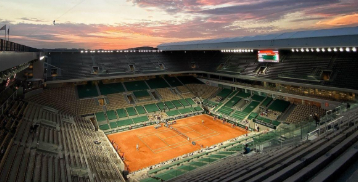
Clay is not simply slower tennis. It is tennis with fewer places to hide. Every year at Roland-Garros, players who appear structurally solid on faster surfaces suddenly look vulnerable in Paris. The reason is not merely physical endurance. It is physics. Clay changes the geometry, timing and energy economics of tennis more aggressively than any other surface. The most immediate difference is friction. Hard courts produce cleaner directional transitions and quicker bounce acceleration. Grass compresses exchanges rapidly. Clay slows the ball while simultaneously increasing rally extension and recovery demands. That combination transforms movement entirely.
You must be logged in to view this content.