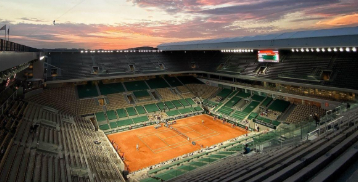
The final week of Roland-Garros 2026 delivered a conclusion few would have predicted when the tournament began two weeks earlier. While several established stars exited before the closing stages, a new group of contenders emerged to seize their opportunities, producing one of the most unpredictable and intriguing French Opens in recent memory.
As the quarter-finals gave way to the semi-finals, much of the conversation centred on the absence of several pre-tournament favourites. Earlier exits by leading names had opened sections of both draws, allowing new stories to develop across the men’s and women’s competitions.
In the men’s draw, Alexander Zverev continued to build momentum throughout the second week. The German displayed consistency, patience and resilience as the matches became increasingly demanding. Long regarded as one of the most talented players of his generation, Zverev appeared determined to capitalise on the opportunity presented by the changing landscape of the tournament.
One of the biggest surprises of the men’s competition came through the remarkable run of Italy’s Flavio Cobolli. Arriving in Paris without the expectations carried by some of the sport’s biggest names, Cobolli steadily advanced through the draw with confident shot-making and fearless court coverage. His performances captured the attention of spectators and analysts alike, transforming him from an outsider into one of the stories of the tournament.
The semi-finals produced several high-quality encounters as the remaining players battled for places in the championship match. Physical endurance, tactical discipline and mental composure all played critical roles as the margins between success and elimination became increasingly narrow.
When the men’s final finally arrived, it featured an unexpected but compelling matchup between Zverev and Cobolli. For Zverev, the match represented another opportunity to secure the Grand Slam title that had eluded him despite years among the game’s elite. For Cobolli, it was the culmination of a breakthrough fortnight that had exceeded almost every expectation.
Ultimately, Zverev’s experience, consistency and ability to manage key moments proved decisive. The German secured his first Roland-Garros title and one of the most significant achievements of his professional career. The victory marked a major milestone and provided a reward for years of persistence at the highest level of the sport.
The women’s tournament proved equally fascinating. Mirra Andreeva emerged as one of the standout performers of the entire championship. Still only in the early stages of what many expect to be a long and successful career, the young Russian demonstrated remarkable composure throughout the fortnight. Match after match, she showed an ability to adapt, problem-solve and remain calm under pressure.
Alongside Andreeva, another unexpected story unfolded through qualifier Maja Chwalinska. Having fought her way through qualifying rounds simply to enter the main draw, Chwalinska continued producing impressive performances against increasingly accomplished opponents. Her journey from qualifier to finalist became one of the most memorable stories of the tournament.
The women’s semi-finals showcased the growing depth within the WTA Tour. Established names and emerging talents competed side by side, illustrating how competitive the women’s game has become in recent seasons.
By the time the championship match arrived, both finalists had already exceeded many expectations. The final itself highlighted contrasting styles and approaches, with Andreeva’s adaptability and court awareness ultimately proving decisive. She captured her first Roland-Garros title and announced herself as one of the leading figures in the next generation of women’s tennis.
Elsewhere during the final week, several notable performances added further depth to the tournament narrative. Marta Kostyuk’s run to the latter stages reinforced her status as one of the tour’s most dangerous competitors. Amanda Anisimova continued to demonstrate strong form, while other emerging players showed they are increasingly capable of challenging the sport’s established hierarchy.
Beyond the individual champions, Roland-Garros 2026 will be remembered for its unpredictability. The tournament highlighted the growing competitiveness of both tours and demonstrated that success is no longer confined to a small group of dominant names.
By the end of the fortnight, two new champions stood atop the Paris clay. Yet the broader story extended far beyond the trophies. The event showcased breakthrough performances, unexpected finalists, changing competitive patterns and the emergence of a new generation eager to leave its mark on the sport.
Roland-Garros 2026 began with familiar favourites and established narratives. It ended with fresh champions, new contenders and a reminder that tennis continues to evolve in ways few can fully predict.