The final week of the HSBC Championships reinforced Queen’s Club’s reputation as one of the most respected and strategically important events on the ATP calendar. While the tournament may not have featured every member of the sport’s elite hierarchy, it delivered precisely what grass-court tennis is known for: unpredictability, tactical variety and opportunities for ambitious players to elevate themselves ahead of Wimbledon.
As the draw narrowed, the competitive balance that had characterised the opening rounds remained intact. Several players entered the quarter-finals carrying strong momentum, while others had already exceeded expectations through impressive victories against higher-ranked opposition. The result was a tournament that felt remarkably open even as the championship match approached.
Tommy Paul emerged as one of the most consistent performers throughout the week. His ability to combine defensive speed with aggressive transition play allowed him to adapt effectively to different opponents and match situations. On grass, versatility is often more valuable than raw power, and Paul repeatedly demonstrated why his all-court game is particularly effective on faster surfaces.
Francisco Cerundolo also impressed, and won the final against Paul in a considerably quick, balanced match. Traditionally viewed as more comfortable on slower courts, he showcased a willingness to adapt his game, strike the ball earlier and take greater risks. His success served as another reminder that modern grass-court tennis increasingly rewards tactical flexibility rather than strict adherence to traditional surface stereotypes.
Elsewhere, Alex de Minaur continued to underline his credentials as one of the tour’s most intelligent competitors. His anticipation, movement and relentless competitiveness frequently compensated for physical disadvantages against bigger servers. Players such as Brandon Nakashima, Ben Shelton and Gabriel Diallo also demonstrated qualities that could make them dangerous opponents during Wimbledon.
The later rounds highlighted the continuing evolution of grass-court tennis. While serving remains critically important, the modern game requires considerably more than simply accumulating aces. Return quality, point construction and transition skills increasingly separate contenders from pretenders.
One of the most interesting themes of the tournament was the relationship between risk and reward. Successful players consistently displayed a willingness to attack. Whether approaching the net, stepping inside the baseline or taking aggressive returns, they recognised that grass rewards initiative. Defensive tennis alone rarely proved sufficient.
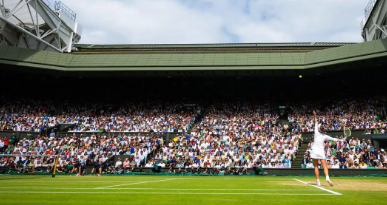
The crowd remained an important factor throughout the final week. Queen’s possesses a unique atmosphere shaped by tradition, intimacy and knowledgeable spectators. British players naturally benefited from local support, but the audience also contributed to the overall quality of the event by creating an environment where every significant point carried additional weight.
Unlike some previous editions, the 2026 tournament also sparked discussion about the role of Queen’s within the modern tennis landscape. Historically, success here often served as a strong indicator of Wimbledon potential. However, evolving schedules, injury management strategies and selective participation from top-ranked players may have altered that relationship.
For many competitors, Queen’s represented more than preparation. It was an opportunity to gain ranking points, secure confidence and demonstrate grass-court credentials before the season’s biggest event. Several players achieved exactly that.
The championship match ultimately reflected the qualities that had defined the tournament throughout the week. Both finalists combined aggression with tactical discipline and demonstrated an ability to remain composed during pressure moments. The contest served as an appropriate conclusion to a week filled with high-quality tennis and compelling narratives.
As attention now shifts towards Wimbledon, Queen’s leaves behind a series of intriguing questions. Which performances represent genuine indicators of future success? Which players have peaked at the perfect moment? And how many of the tournament’s breakthrough performers can carry their momentum onto an even bigger stage?
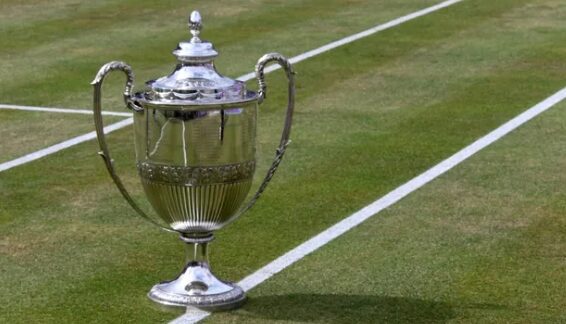
Regardless of the answers, the 2026 HSBC Championships once again fulfilled their role as one of the sport’s most valuable grass-court examinations. The winners leave with trophies, but many others leave with belief. On grass, that can be just as valuable.